



CROSS FLOW FAN
Company Profile
Established in 2003, Shenzhen Amore Industrial Co., Ltd (AMR) is a company devoted in the production of AC/DC axial fans, motors and SPD. There are 4 divisions under the company, namely: Electronic Cooling Division, Surge Protective Device Division, Motor Division, and Y.S. TECH Agency Division. AMR products all have been certified by CCC, CE, UL, TUV and etc. The factory has passed ISO9001, ISO14001, QS9000 and other certifications.
Why Choose Us
Quality Control
Based on the principle of quality first and customer first, AMR employs advanced technology and continuously improves product quality to meet the needs of customers. Our clients include Huawei, ZTE, Emerson, China Mobile, China Unicom, China Telecom, Southern Power Grid, as well as APC, Delta, Eltek and other famous customers both at home and abroad.
Professional Team
Our target is to provide excellent quality and professional services. In the ever-changing global economic environment, AMR endeavors to work with customers for a better future.
Our Factories
AMR has 3 factories in Shenzhen. The factories have set up excellent management system and boast of most professional teams armed with advanced production and experimental equipment and develop cutting-edge technologies.
Our Certificate
Passed ISO9001、ISO13485 quality management system certification.
The series products have passed UL、CE、 3C international certification.


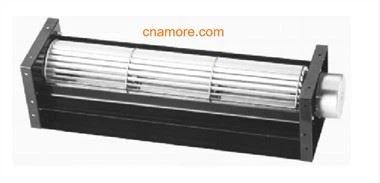


Widely used in electric fireplace,air-cleaning,Industrial cooling,microwave,air conitioning,air curtain machine,heater and other related fileds.
What is Cross Flow Fan?
Cross flow fans, also known as tangential fans, are designed to create a wide, uniform flow of air. Unlike axial fans that move air parallel to the fan's axis, cross flow fans push air perpendicularly through the fan. This unique design makes them ideal for applications requiring consistent air distribution across a surface.
When the impeller rotates, the air flow enters the cascade from the opening of the impeller, passes through the impeller, and is discharged into the volute from the other side of the cascade to form the working air flow. The flow situation of air flow in the impeller is very complex, the air flow velocity field is unstable, and there is also a vortex in the impeller, with the center located near the volute tongue.
Compact Structure, Small Size
The compact design of cross flow fans enables them to operate efficiently in limited installation spaces. Their small size makes them suitable for mounting on walls, ceilings, or other confined spaces, offering users greater installation flexibility. This design also enables their effective operation within industrial equipment or tight spaces, providing reliable ventilation solutions for confined spaces.
Low Noise, Minimal Vibration
Utilizing advanced shock absorption technology and optimized design, cross flow fans operate with lower noise levels and effectively suppress vibrations. This makes them suitable for noise-sensitive environments such as offices, hospitals, or places requiring quiet work environments. Reduced noise and vibration contribute to enhanced reliability and long-term stability of the fan, minimizing disruption to equipment and personnel.
Uniform Airflow, High Stability
Cross flow fans employ a unique airflow transmission method, ensuring uniform and stable airflow. This uniform airflow guarantees balanced air movement within the system, reducing pressure fluctuations caused by airflow. This is particularly crucial for systems requiring consistent air movement (e.g., ventilation, air conditioning), improving system efficiency and maintaining indoor air quality.
Power Supply
The DC Motor Cross flow fan is connected to a power source, mostly an AC power line. This power is converted and regulated via an onboard power supply unit that ensures appropriate voltage and current levels for the fan's proper functioning.
Electronics Control
The control electronics receive commands and signals from external sources like sensors, thermostats, or control systems. These built-in sensors manage humidity, temperature, and pressure.
Stator And Rotor
The brushless DC motor consists of a stationary component called the stator and a rotating component called the rotor. The stator has multiple sets of windings in three phases that are energized to generate rotating magnetic fields.
Commutation
This is the critical difference between traditional AC cross flow fans and DC/EC cross flow fans. DC EC Cross flow fans use electronic commutation to switch the current flow. In this case, the control electronics monitor the speed and position of the rotor via sensor feedback or estimation algorithms for internal rotor positioning.
Pulse Width Modulation (PWM)
EC / DC Cross flow fans utilize this feature to control the torque and speed of the motor. Control electronics adjust the pulse width and frequency of the stator windings' current to regulate the power supplied to the motor effectively.
Magnetic Field Interaction
A magnetic field is created when the current flows through the stator windings. The rotor has permanent magnets which interact with the magnetic field to rotate.
Variable Speed Control
As the control electronics alter the frequency and amplitude of the current pulses, they precisely control the speed and direction of the rotor. This allows ec or dc motor cross flow fans to produce airflow at different rates to attain cooling and ventilation requirements.
Centrifugal Fans Vs. Cross Flow Fans
Centrifugal fans generate centrifugal force by rotating impellers, accelerating and discharging air. Their operation is based on the principle of converting kinetic energy into potential energy. When the impellers rotate, air are forced outward, forming airflow. Centrifugal force accelerates air, and within the casing, air decelerate and change direction, converting kinetic energy into potential energy. Centrifugal fans are commonly used in applications requiring high gas flow rates and elevated gas pressures, such as factories, mines, and tunnels.
Cross flow fans operate on a relatively simpler principle. Their internal impellers have multiple blades, propelling air as they pass through. The airflow path of cross flow fans is straight without significant twists or turns. Due to their uncomplicated operation, cross flow fans are suitable for long-distance gas transportation, such as in air conditioning units and air curtain devices.
Centrifugal fans find extensive applications in various industrial settings, providing ventilation, dust removal, and cooling solutions to ensure clean and comfortable working environments. In mines and tunnels, centrifugal fans are used to eliminate harmful air and ensure air circulation. They are also employed in ships and vehicles for heat dissipation and ventilation, maintaining engine efficiency.
On the other hand, cross flow fans are mainly used in small-scale equipment, including household air conditioning units and commercial air conditioning systems. Their straightforward structure makes them lightweight and easy to install. In residential HVAC systems, cross flow fans play a crucial role in ensuring proper air circulation and heat dissipation, enhancing the efficiency of air conditioning systems. In commercial HVAC systems, cross flow fans are widely used, maintaining airflow and comfort in places like malls and office buildings.
Centrifugal fans boast high gas pressure and efficiency due to their ability to handle substantial gas flow. Their stable performance and wide applicability make them a popular choice. While cross flow fans have relatively lower performance, ongoing technological advancements are steadily enhancing their capabilities, making them suitable for larger equipment. Longwell Electrical Technology Co., Ltd.'s products exhibit features such as high efficiency, energy conservation, and robust stability, garnering widespread market recognition.
Continuous technological advancements have driven innovations in the design and manufacturing of both centrifugal and cross flow fans. In centrifugal fans, researchers continually refine impeller designs to improve fan efficiency and performance. Advanced materials and manufacturing techniques enhance fan durability and stability. Additionally, the application of smart technology enables intelligent fan operation, facilitating remote monitoring and automatic adjustments, thereby enhancing the efficiency of fan systems.
Applications Of Cross Flow Fans
Ventilation Systems
Cross flow fans play a pivotal role in the ventilation systems of diverse settings, including buildings, factories, and offices. They effectively facilitate air circulation, maintaining indoor air freshness by eliminating stale air and ensuring suitable temperature and humidity levels.
Refrigeration Systems
These fans are indispensable in refrigeration systems, circulating air to lower indoor temperatures and sustain the overall efficiency of the cooling system.
Air Circulation Systems
Widely used in environments like production lines, warehouses, and laboratories, cross flow fans contribute to maintaining balanced air circulation, crucial for temperature and humidity equilibrium. This is essential for meeting high air quality demands in production processes or experimental environments, ensuring smooth operations or experimental stability.
What is The Structure of a Cross Flow Fan?
Impeller
When it comes to their appearance, crossflow impellers (also known as drums) resemble very elongated radial impellers. The impeller's relatively flat, forward-curved blades allow for a compact design or space-saving installation.
Motor
On a crossflow fan, the drive motor is usually mounted at the end of the drum, outside the air flow, and connected to the impeller via an engineered shaft. In principle, crossflow fans can be operated with different drive concepts.
Depending on the application requirements, energy-saving EC motors or robust AC motors are usually used.
Housing
The housing is of central importance for how the air is guided in a crossflow fan. From the intake side, the air is directed into the swirl zones, accelerated and deflected. The nature of the air outlet on the pressure side allows for even air movement over a large area.
How to Evaluate the Quality of Cross Flow Fans
Visual Inspection: Visual inspection is the most intuitive method of quality assessment. We need to carefully examine whether the cross flow fan's casing is smooth and seamless, if the blades have scratches or cracks, and whether there are any loose connections. These surface flaws often indicate potential internal issues such as material fatigue or inadequate processing precision. For example, minor cracks on the blade surface may enlarge during operation, leading to decreased performance or even failure.
Performance Testing: Performance testing is a crucial means of evaluating cross flow fan quality. It involves rigorously testing various performance parameters including airflow, pressure, power consumption, etc. For instance, using specialized airflow measuring instruments to accurately measure airflow and ensure it meets design specifications. Additionally, attention should be given to the fan's stability and reliability under different operating conditions, such as maximum or minimum loads. These tests help assess whether the fan performs as expected in real-world scenarios.
Material Inspection: Material inspection forms the foundation of ensuring cross flow fan quality. Detailed checks of materials like copper wires in the motor, aluminum alloy blades, steel ducts, etc., are conducted to ensure they comply with relevant standards and specifications. For instance, special focus is placed on the quality of insulation materials in motors as it directly impacts the motor's lifespan and safety. High-quality insulation materials effectively prevent electrical faults and short circuits, thereby enhancing motor reliability.
Manufacturing Process: The manufacturing process directly influences cross flow fan quality. Attention is paid to the production process, including welding, assembly, painting, etc., to ensure they meet high standards of craftsmanship. For example, the quality of welded joints is critical to the structural strength of the fan, and we specifically check for firmness and absence of defects like porosity in welded areas. Advanced manufacturing processes can improve product precision and durability, extending the product's lifespan.
Design Rationality: Design rationality is crucial to ensuring the efficient and stable operation of cross flow fans. Analysis of the fan's structural layout, airflow channel design, heat dissipation system, etc., determines whether they effectively enhance the fan's operational efficiency and reduce energy consumption. For instance, optimized airflow channel designs can reduce flow resistance, increasing the fan's airflow and pressure.
How to Clean and Maintain the Cross Flow Fan!
Cross flow fan cleaning
Gently unplug the power supply of the cross-flow fan to achieve mechanical and electrical separation. Be careful when unplugging the power supply. Dilute the neutral detergent with a small amount of warm water or prepare a little light soapy water. If it is oily, use hot water and detergent. Add a little detergent, and hot water must be used here. Loosen the front and rear screws, and gently remove the rear cover of the Masano exhaust fan. Pull out the connector of the exhaust fan, and remove the filter and the rear cover together. Do not touch them together.
Put the filter and the back cover into the container, wash it for 10-15 minutes and then replace it with clean water. Do not immerse the small motor in water, and do not rinse the small motor with water. Wipe the cleaned fan blades and inner wall with clean water. Reinstall the filter and the rear cover. The distance should not be too close, and air circulation and humidity should be balanced. If necessary, you can consider using some dehumidifiers or dehumidification facilities.
Maintenance of cross flow fan
Do not switch frequently. Avoid high temperatures and direct sunlight to avoid deformation of the leaves. Regularly remove the oil stains, remove the oil stains on the wind blades, shutters and panels, and do not use corrosive chemical solutions when cleaning, otherwise it will easily damage the plastic parts and the outer paint. Fill the motor regularly with lubricant. When reinstalling after cleaning, the fan blade nut must be tightened to prevent the fan blade from rotating and flying out after being energized, and accidents may occur. The filter-type fan should also clean the filter grid regularly, if the activated carbon grid must be dried, otherwise it will affect the filtering effect. The water in the sink should be added frequently to keep it at a safe level, and it should be replaced regularly.
After a long period of operation, the air volume and cooling effect of the filter screen and air curtain will be affected due to the blockage of dust and dirt. It is best to clean it every two weeks. The distance should not be too close, and air circulation and humidity should be balanced. If necessary, consider using some dehumidifiers or dehumidification facilities. The cross-flow fan should be used strictly in accordance with the product instruction manual, and regular professionals should be cleaned and inspected regularly to extend the life of the fan.
Our Factory
Our target is to provide excellent quality and professional services. In the ever-changing global economic environment, AMR endeavors to work with customers for a better future.Based on the principle of quality first and customer first, AMR employs advanced technology and continuously improves product quality to meet the needs of customers. Our clients include Huawei, ZTE, Emerson, China Mobile, China Unicom, China Telecom, Southern Power Grid, as well as APC, Delta, Eltek and other famous customers both at home and abroad.


FAQ