



EC Fan
Company Profile
Established in 2003, Shenzhen Amore Industrial Co., Ltd (AMR) is a company devoted in the production of AC/DC axial fans, motors and SPD. There are 4 divisions under the company, namely: Electronic Cooling Division, Surge Protective Device Division, Motor Division, and Y.S. TECH Agency Division. AMR products all have been certified by CCC, CE, UL, TUV and etc. The factory has passed ISO9001, ISO14001, QS9000 and other certifications.
Why Choose Us
Quality Control
Based on the principle of quality first and customer first, AMR employs advanced technology and continuously improves product quality to meet the needs of customers. Our clients include Huawei, ZTE, Emerson, China Mobile, China Unicom, China Telecom, Southern Power Grid, as well as APC, Delta, Eltek and other famous customers both at home and abroad.
Professional Team
Our target is to provide excellent quality and professional services. In the ever-changing global economic environment, AMR endeavors to work with customers for a better future.
Our Factories
AMR has 3 factories in Shenzhen. The factories have set up excellent management system and boast of most professional teams armed with advanced production and experimental equipment and develop cutting-edge technologies.
Our Certificate
Passed ISO9001、ISO13485 quality management system certification.
The series products have passed UL、CE、 3C international certification.


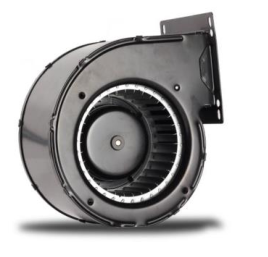


What is EC Fan?
EC (Electronically Commutated) fans are a type of fan that utilizes a brushless DC motor combined with electronics to provide efficient and precise control of fan speed and operation.
The motor operates at DC voltage but uses a single-phase 230VAC or three-phase 400VAC power supply. This motor contains voltage conversion within the motor.
The non-rotating part of the motor (stator) is extended to make space for the electronic PCB, which includes power conversion from AC to DC, and controls.
Benefits of EC Fan
Energy Savings
EC fans typically consume up to 70% less energy compared to traditional AC fans, making them an environmentally friendly choice.
Precision Control
The ability to precisely control fan speed allows for better matching of airflow to the specific needs of the application, enhancing performance and efficiency.
Longevity
The lack of brushes in the motor reduces mechanical wear, leading to a longer lifespan and lower maintenance requirements.
Versatility
EC fans can be used in a wide range of applications, including HVAC systems, refrigeration, data centers, and various industrial processes.
Are easy to control
Furthermore, EC fans are easy to control. The electronics in the motor act as a VFD, taking power and throttling it to achieve the required fan speed. This means that there is no need for a VFD–it is replaced with a simple speed controller. Note that Mainstream has different controllers available, but a speed controller is always included with our EC fan arrays. All the EC fan requires is power and a control signal.
Require essentially zero maintenance
EC fans will never require replacement belts, shafts, greased bearings, or any balancing. In the unlikely event of a fan failure, replacing the fan is as simple as removing four bolts and wiring. Replacement EC fans are available in stock, and are small enough and light enough that a replacement typically requires no more than two people for half an hour.
Energy Savings One of the main differences between VSDs and EC fans is that VSDs save energy when the fan speed can be operated below full speed. VSDs do not reduce energy consumption when the airflow demands require the fans to operate at or near peak load. Conversely, EC fans typically require less energy even when the same quantity of air is flowing.
This allows them to still save energy when the cooling unit is at full load. EC fans also distribute air more evenly under the floor, resulting in more balanced air distribution. Another benefit of direct-drive EC fans is the elimination of belt losses seen with centrifugal blowers. Ultimately, EC fans are the more efficient fan technology.
Cooling Unit Type VSDs are particularly well-suited for larger systems with ducted upflow cooling units that require higher static pressures, while EC fans are better suited for downflow units.
Maintenance In terms of maintenance, EC fans offer an advantage. EC fans also reduce maintenance because they have no fan belts that wear and their integrated motors virtually eliminate fan dust.
Installation Both VSDs and EC fans can be installed on existing cooling units or specified in new units. When installing on existing units, factory-grade installation is a must.
BLDC Motor
The BLDC motor consists of a rotor and a stator. Permanent magnets in the rotor produce a magnetic field which is required for full load production. BLDC motors have a brushless design and operate on feedback and supplied signals. The BLDC motor used in EC fans is generally an outrunner type.
Electronic Control Unit (ECU)
The ECU, also known as the motor controller is integrated in the motor itself. It receives input signals, such as speed commands or sensor feedback, and adjusts the power supplied to the motor accordingly.
Sensor Feedback
Many EC fans have different sensors, such as Hall effect sensors to provide feedback on parameters like rotor position or speed.
Speed Control
The ECU regulates the speed of the BLDC motor over a wide range by adjusting the timing and duration of the electrical pulses sent to the motor windings.
Airflow Generation (Fan)
As the BLDC motor rotates, it drives the fan blades to produce airflow. The speed and torque of the motor determine the volume and pressure of the airflow generated by the fan. In modern EC fans the blades are mounted on the body of the motor itself, making it compact and rugged.
The Difference Between AC and EC Fans
Mains electricity is AC. AC fans run on an alternating current whereas EC fans run on a combination of AC and DC (direct current) which is made from mains electricity by a power supply.
AC fans are cheaper than EC fans. EC motors are newer technology than AC motors and the price will come down as time goes by and they gain popularity.
EC fans are more efficient and use less power than AC fans for a given amount of air flow. While AC fans are between 60-75% efficient, EC fans are 80-90% efficient. So while EC fans are more expensive to buy they will save you money on your electricity bills in the long run. They can end up actually costing less than AC fans when the price of the electricity is taken into account.
If an AC fan is used with a cheap fan speed controller it can produce a noisy rumble due to the way that it adjusts the power. It is possible to get around this with a stepped hybrid controller, but these are very expensive. Also, you are stuck with only a few fan speeds to choose from. EC fans do not produce a rumble when they are turned down and they have no step; they can be turned up from minimum to maximum and every position in-between. EC fan speed controllers are more efficient than AC fan speed controllers which further reduces the running costs.
EC motors are smaller for a given power rating than AC motors. This means the fan unit enclosures that they go into can be made smaller. Space savings in a grow space can be very useful leaving more room for the grow light and other equipment.

Why Use EC Fans
By maintaining the same interface between the fan and the appliance, EC fans are a drop-in replacement for AC fans while offering the same or higher airflow capacity — all with significantly less power.
A large portion of the energy efficiency of EC fans occurs because they have built-in variable speed control. Since the relationship between the fan speed and the power required by the fan is a cube function, small reductions in the fan speed lead to large reductions in the power requirement. Precisely controlling the fan speed to match the airflow demand of the application can result in substantial energy savings.
EC fans have longer service life due to the smaller heat losses and lower operating temperatures. The lower operating temperature means that the fan does not have to do extra work to remove wasted heat that is generated by the motor itself. When compared to AC motors, which tend to have peak efficiency at a single speed, EC motors offer a wide operating window of fairly constant efficiency over a range of speeds due to their variable fan speed control. In addition, EC motors require little to no maintenance and provide increased reliability. Since EC fans have lower operating costs, this leads to shorter payback periods for new equipment.
EC fans are ideal for use in major home appliances such as refrigerators, freezers, ovens, range hoods, microwaves, dishwashers and clothes washer-dryers, commercial and process controls, refrigeration, electronic enclosures and cabinets. Originally used only in high-end appliances, EC fans are now used in high volume/mass market appliances and other applications due to their energy savings advantages (i.e., their higher efficiencies). Additional applications may include air conditioning units, heat pumps, furnace fans, dehumidifiers, beverage vending machines, automatic icemakers, commercial appliances, commercial chillers, duct fans for ventilation, condenser units and extraction fans for removing smoke and exhaust.

Natural convection cooling uses motion caused by density differences in a fluid due to a temperature difference. A fluid expands and becomes less dense when heated. The lighter fluid rises, causing a motion in the fluid called natural convection currents. Natural convection currents can be used to circulate the air in a control enclosure and keep it cool.
Forced air convection cooling uses fans to blow air through the enclosure that houses the electronic components, boosting natural convection. A typical forced convection system includes a fan with a filter to increase the velocity and flow rate of the fluid, in addition to increasing the amount of heat transfer.
Heat exchangers transfer heat from electronic enclosures into a fluid. The heat from this fluid is transferred to a second fluid inside the heat exchanger. The original fluid (liquid or gas) is cooled and returned to the assigned location, restarting the Fans or pumps are used to keep the fluids in motion.
Air Conditioners use refrigerant and air-moving systems to cool air. A typical air conditioner transfers heat from the enclosed components by circulating air around and through them. This air is then cooled, dehumidified, and returned to the enclosure. The cooling takes place within the air conditioner and the heat is discharged using a vapor compression refrigeration cycle.
Thermoelectric Coolers, or Peltier coolers, have fans inside and outside the enclosure and use a thermoelectric unit in place of typical fluid-based refrigeration systems. Thermoelectric units are essentially an array of semiconductors placed between two ceramic plates. When a direct current is applied to the semiconductor array, heat is driven from one plate to another, creating a cold and warm side.
Vortex coolers create a stream of extremely cold air from a continuous supply of filtered compressed air. The cold air is first injected into the enclosure, displacing the warm air, which is pushed through the vortex cooler. Vortex coolers can also be used where the ambient temperature exceeds the enclosure temperature.
Our Factory
Our target is to provide excellent quality and professional services. In the ever-changing global economic environment, AMR endeavors to work with customers for a better future.Based on the principle of quality first and customer first, AMR employs advanced technology and continuously improves product quality to meet the needs of customers. Our clients include Huawei, ZTE, Emerson, China Mobile, China Unicom, China Telecom, Southern Power Grid, as well as APC, Delta, Eltek and other famous customers both at home and abroad.


FAQ